

The fossil of a giant 180-Million-Year-Old Ichthyosaur With 100 Teeth, a sea reptile with a stomach full of rocks, has been found in Mistelgau, Germany. It is estimated to measure 21 feet in length. This was reported in a study published in the journal Zitteliana.
Download PDF of the Study – Direct Link
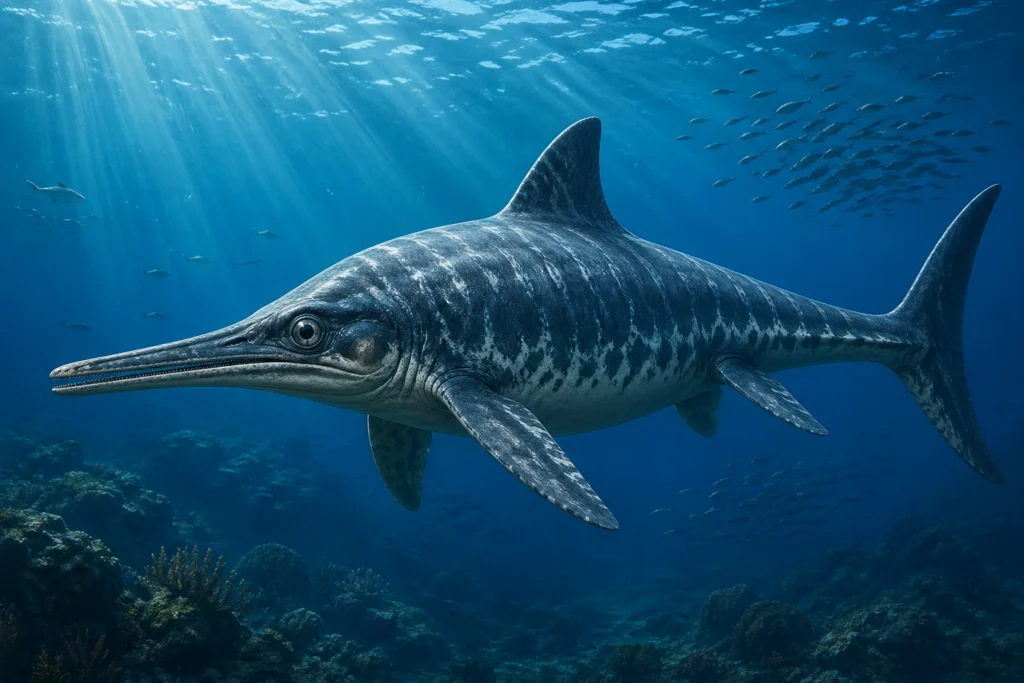
Table of Contents
What & Where This Discovery Was Made
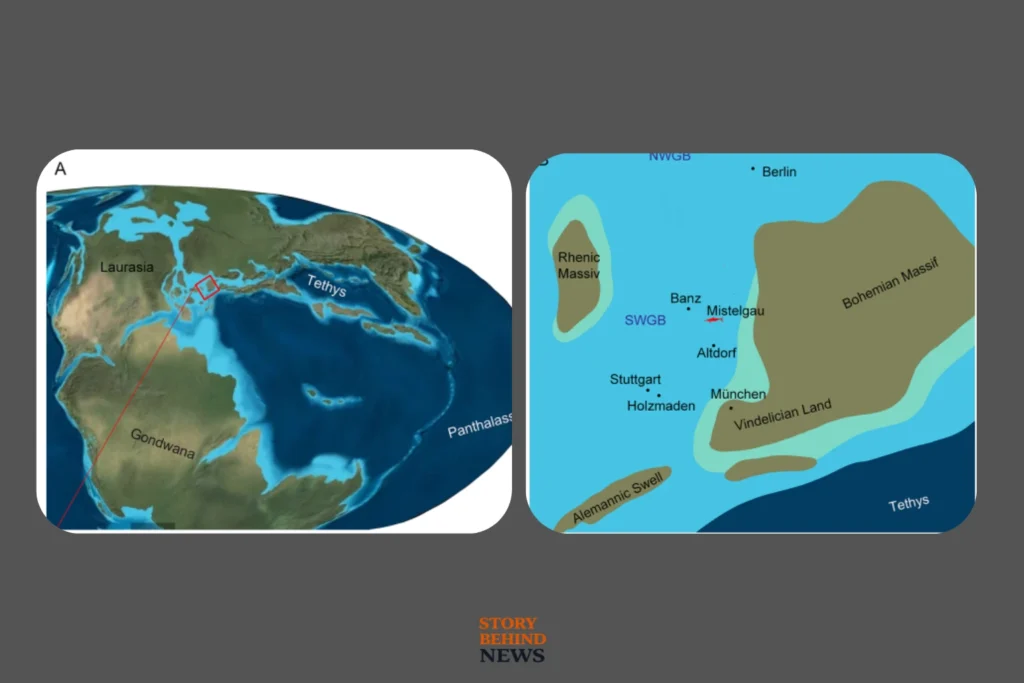
This fossil of 180-Million-Year-Old Ichthyosaur With 100 Teeth was found in a clay pit in the northern part of Germany and is in a well-preserved state. It lived around 180 million years ago and is known as Temnodontosaurus, which is part of the large group of ichthyosaurs. It looked like dolphins, but there is no real relation between them. Its size is estimated to be around 21 feet, and it had 100 teeth. Several injuries were found, which made hunting prey difficult. Still, this marine reptile survived against all odds. This discovery is helping scientists better understand prehistoric marine predators.
The team at the Urwelt Museum Oberfranken made this discovery. They have been excavating fossils in Mistelgau, Germany, since 1998. They collected, prepared, and studied the ichthyosaur fossils. The Mistelgau site has been known for its well-preserved marine fossils since excavations began in 1998.
Quick Explanation: What Is an Ichthyosaur and the Temnodontosaurus Genus?
An ichthyosaur is a group of marine reptiles that looked like dolphins. They lived during the Mesozoic Era (about 250–90 million years ago), and Temnodontosaurus is a genus within this large group of ichthyosaurs.
🔗 Also read: Apple CEO John Ternus Net Worth: Replacing Tim Cook in 2026
What Was Found in the 180-Million-Year-Old Ichthyosaur With 100 Teeth
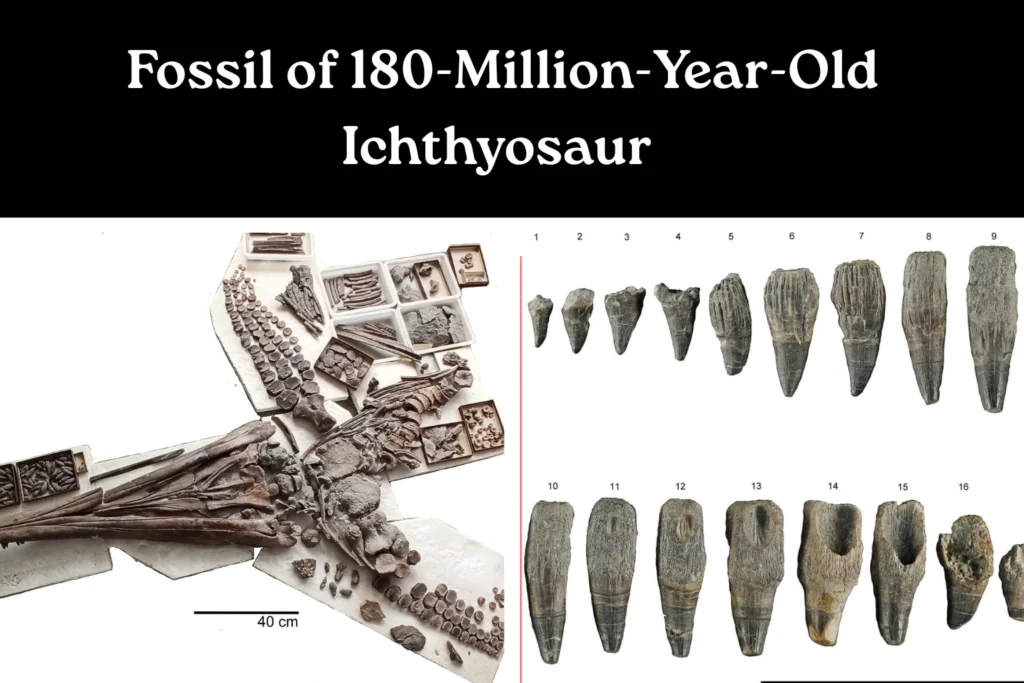
There are multiple injuries present in the shoulder and jaw joint area. This Temnodontosaurus has over 100 teeth, and stones were found in its stomach, though their purpose is unclear. The skeleton shows that “the injuries likely significantly limited the animal’s ability to catch prey,” said Stefan Eggmaier, another author of the study.
Fossil Preservation Style Stands Out from the Discovery
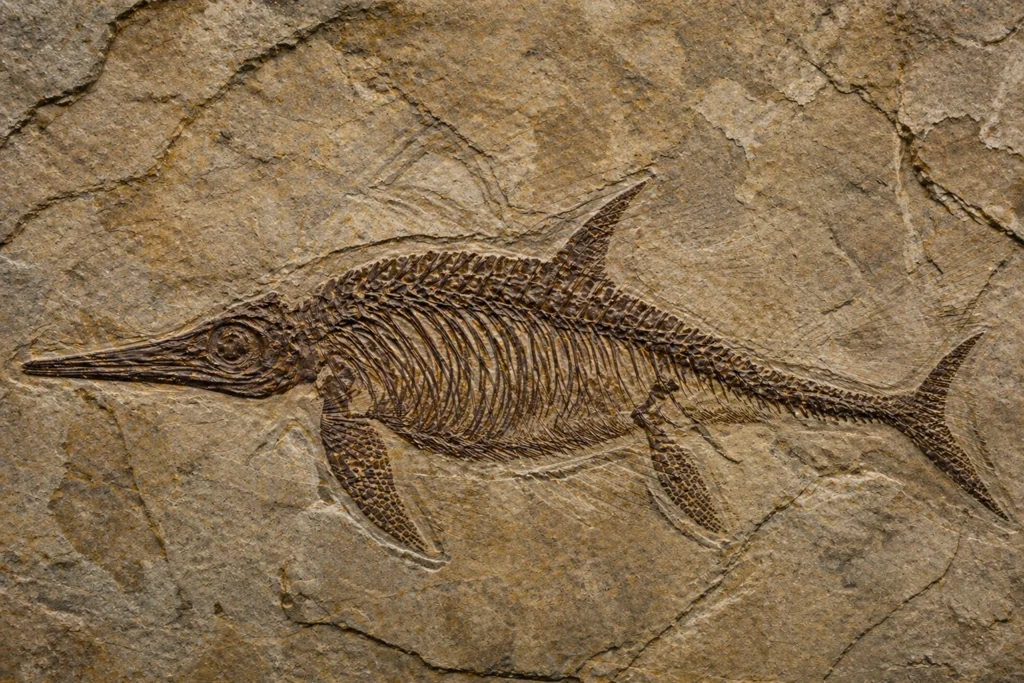
The level of preservation of this fossil is stunning. It includes an almost perfectly preserved skull, lower jaw, shoulder girdle, spine, and more than 100 teeth. Even fragile structures, such as parts of the palate and eye region, have been preserved in striking three-dimensional anatomical detail.
What Scientists Say About 180-Million-Year-Old Ichthyosaur With 100 Teeth
“Our Temnodontosaurus fossil is one of the youngest finds of this ichthyosaur genus to date. Until now, representatives of this genus have mainly been known from older geological layers,” Ulrike Albert, author of the study published in the journal Zitteliana, told the Independent.
“The discovery from Mistelgau now shows that these large marine reptiles survived longer in the Southwest German Basin than previously documented,” said Dr. Albert, a palaeontologist at the Bavarian State Collections of Natural History.
🔗 Also read: Google Fitbit Air 2026 Leaks and Rumors: All We Know So Far!
Was the Injuries & Stomach Stones Clues Survival Strategy?
Stones were found in the stomach of the ichthyosaur. Researchers say that stones are generally not found in ichthyosaurs, but they are assuming a correlation between the injuries on the body and these stones. The presence of worn-down teeth and gastroliths suggests that these reptiles had limited hunting capability.

According to the University of California Museum of Palaeontology, scientists cannot identify exactly what role gastroliths played in marine reptiles. However, some scientists speculate that the stones worked as internal grinding tools, helping to break down food, and that the ichthyosaur may have changed its diet to survive its injuries.
“The fact that it nevertheless survived is evidenced, among other things, by its heavily worn teeth and gastroliths, which we were able to identify in the abdominal region,” Dr Eggmaier said.
Reference
🔊 For this article, the information has been taken as a reference from a study published in Zitteliana: A partial skeleton of Temnodontosaurus cf. trigonodon in three-dimensional bone preservation from the upper Toarcian of Mistelgau, Germany
🔗 Explore more on: www.storybehindnews.com
