

A ₹10,000 crore fund has been approved by the government for the next generation of Indian startups, particularly in deep-tech. It has been launched under Startup India Fund Of Funds 2.0. The first phase of the Fund of Funds for Startups (FFS 1.0) was launched in 2016, during which a ₹10,000 crore corpus was also allocated.
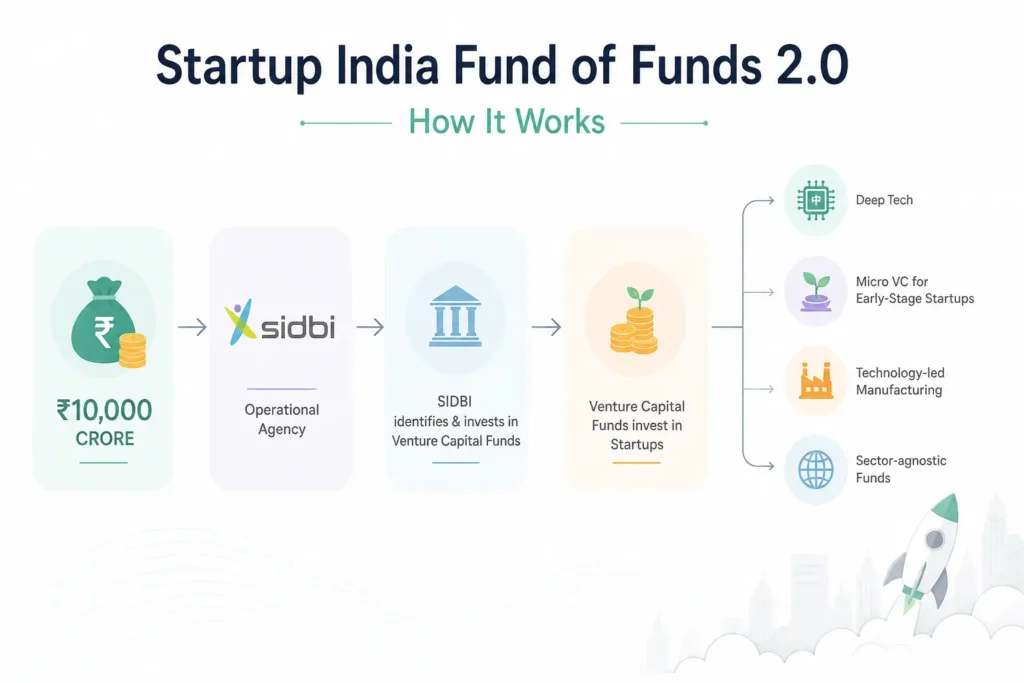
Table of Contents
What is the Startup India Fund of Funds About?
A government-backed financial initiative to boost startup funding in India under the Startup India Initiative. In this framework, the government does not directly invest in startups; it invests in Alternative Investment Funds (AIFs) via venture capital. The first phase was launched in 2016, with ₹10,000 crore allocated. In 2026, the government approved ₹1,000 crore for the Startup India Fund of Funds 2.0 under the second phase. Implementation was carried out by SIDBI and will continue under FoF 2.0 with the same agency.
Startup India Fund of Funds 2.0: Structure, Goals & Impact
The allocated fund of ₹10,000 crore has clear guidelines from the Department for Promotion of Industry and Internal Trade (DPIIT) for fund deployment, governance, and monitoring, with the objective of improving the efficiency of capital flows into India’s startup ecosystem. The fund will invest in SEBI-registered Category I and II Alternative Investment Funds (AIFs), which in turn invest in startups, with contributions capped at 50% of any AIF’s corpus. Startup India Fund of Funds 2.0 has four focus areas: Deep Tech, Early-Stage Startups, Technology-Led Manufacturing, and Sector-Agnostic Funds. Investments will be spread across 16th and 17th Finance Commission cycles.
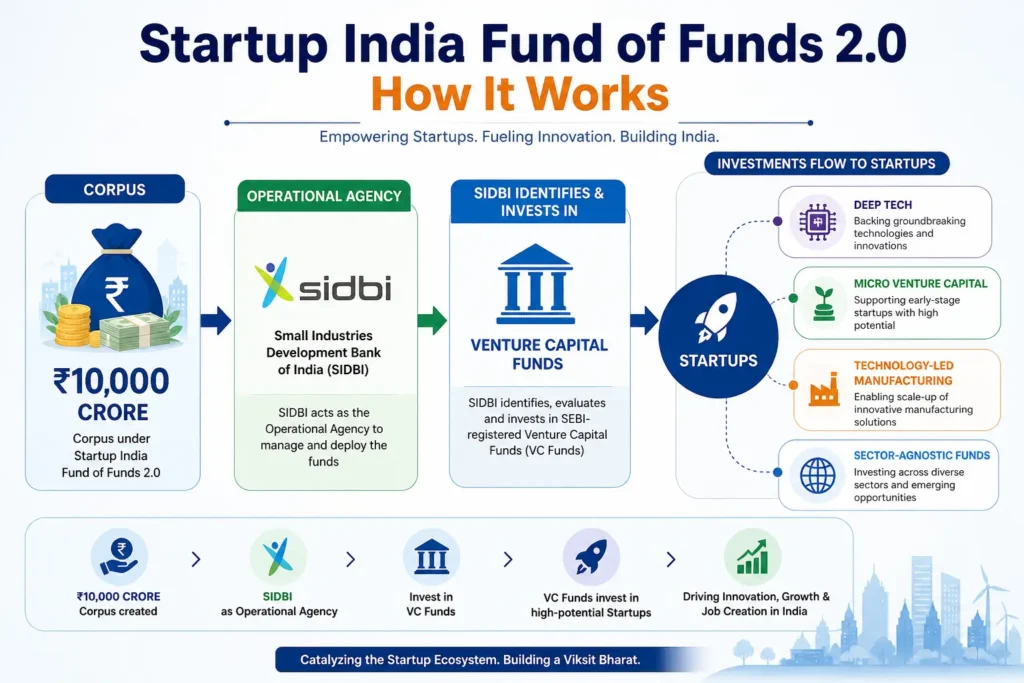
The initial implementing agency is SIDBI, which will oversee monitoring and the selection process. In addition, another domestic agency will be selected later to implement the scheme. The selected AIFs will go through a two-stage selection process: first, the implementation agency (currently SIDBI) will undertake initial screening and due diligence; this will be followed by evaluation by a Venture Capital Investment Committee, which will be responsible for assessing the team’s track record, fund management capability, and investment strategy.
There are provisions for co-investment in the notification. This works as an umbrella framework, where pension funds or development finance institutions can invest alongside the selected AIFs under the same framework.
“Startup India Fund of Funds 2.0 will have an expanded scope with segmented approach to target key segments for real innovation,” the notification by Department for Promotion of Industry and Internal Trade (DPIIT) said.
🔗 Also read: EPFO 3.0 Rules: How to Instantly Withdraw PF Using UPI & ATM
What is an AIF Fund and How Does It Work?
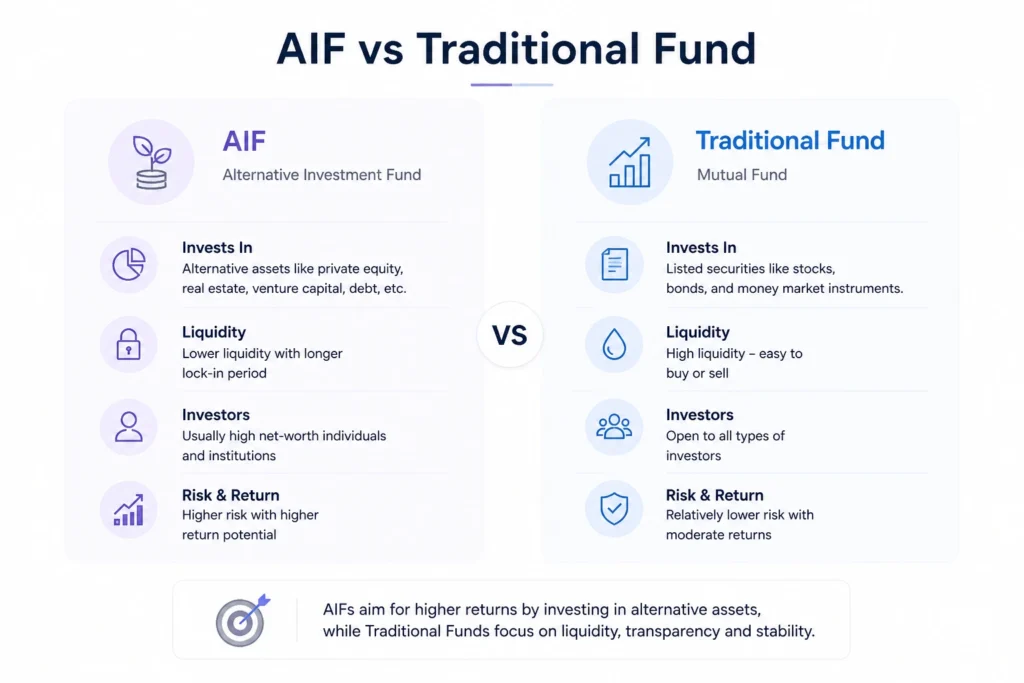
An Alternative Investment Fund (AIF) is a fund collected from HNI investors that is invested in non-traditional assets like startups, hedge funds, and private companies. These investments carry higher risk but also offer higher returns. Generally, the minimum investment required is ₹1 crore, and there is a long lock-in period.
🔗 Also read: Google Fitbit Air 2026 Leaks and Rumors: All We Know So Far!
Investment Focus Areas & Criteria for the Corpus
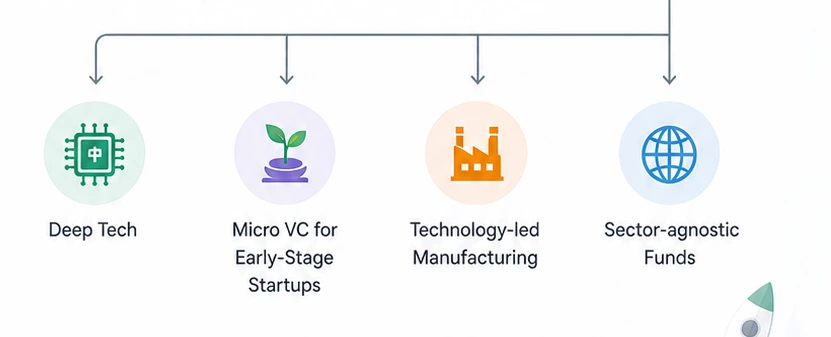
This ₹1,000 crore corpus has predefined parameters on how it will be invested, including limits, tenure, and private capital mobilisation ratios. It segments AIFs into four main categories: deep tech, micro venture capital for early-stage startups, technology-led manufacturing, and sector-agnostic funds. The fund must invest more than what the government gives, and the extra amount comes from private investors.
Deep Tech:
- There is no corpus cap; the fund can be of any size.
- The fund life may extend up to 18 years.
- The FoF contribution is capped at 40% of the corpus, with a maximum of ₹500 crore.
- A 1.5X investment multiplier applies.
Early-Stage Startups:
- The corpus is capped at ₹400 crore.
- The fund tenure may extend up to 10 years.
- The FoF contribution is capped at 30% of the corpus, with a maximum of ₹100 crore.
- A 2X investment multiplier applies.
- The PPM must allocate at least 50% of the corpus to seed and early-stage startups, with a per-startup investment limit of ₹10 crore.
Technology-Led Manufacturing:
- There is no corpus cap; the fund can be of any size.
- The fund tenure may extend up to 18 years.
- The FoF contribution is capped at 30% of the corpus, with a maximum of ₹200 crore.
- A 1.75X investment multiplier applies.
- The PPM must indicate support for government-defined champion sectors.
Sector-Agnostic Funds:
- There is no corpus cap; the fund can be of any size.
- The fund tenure may extend up to 12 years.
- The FoF contribution is capped at 25% of the corpus, with a maximum of ₹180 crore.
- A 2.5X investment multiplier applies, meaning the fund must invest significantly more than the government’s contribution.
- There are no additional PPM requirements.
Why Governments Prefer Investing in Venture Capital Instead of Startups Directly?
The government does not have the expertise to make direct investment decisions, and the process can be slow. Venture capital firms identify opportunities better with less risk, and startups can be supported more effectively because VC firms specialize in investments. The government will still watch the process through an Empowered Committee, which actively monitors implementation and tracks the scheme’s performance.
🔗 Also read: 2026 Honda CBR150R Hits Malaysia Market with New Color
Governance Structure and Return Utilization Strategy
Governance: To monitor implementation, review performance, and issue policy directions, DPIIT will constitute an Empowered Committee chaired by its Secretary. AIFs are required to submit annual reports covering fund utilisation, portfolio investments, and NAV (Net Asset Value). A third-party review is mandated every five years.
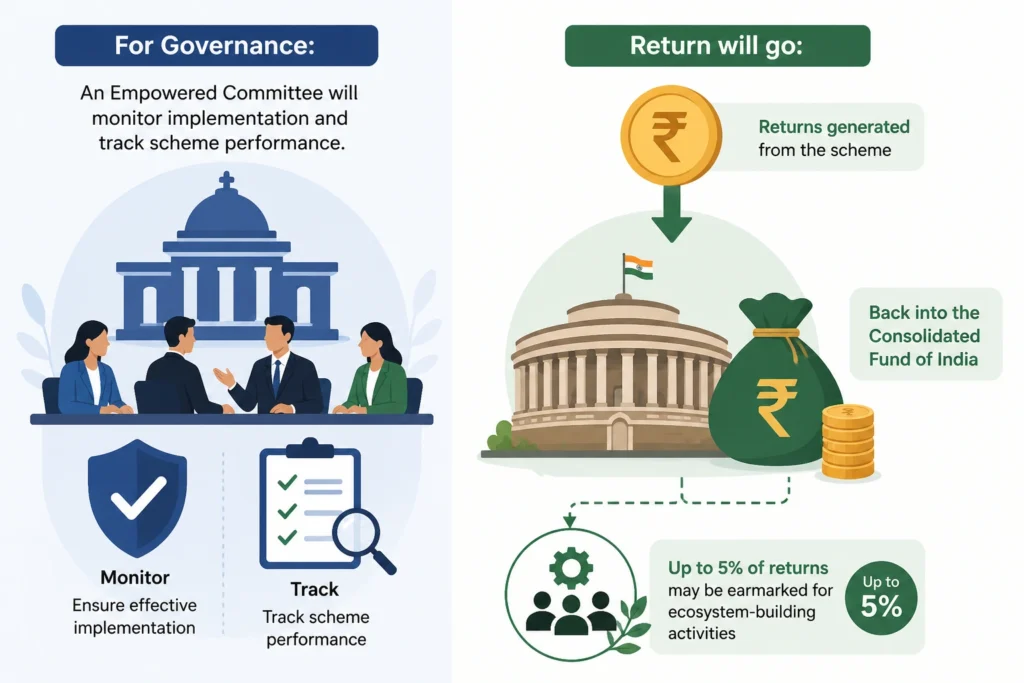
Return Utilization: The returns will be deposited back into the Consolidated Fund of India. From this, up to 5% of the returns will be utilised for ecosystem-building activities such as mentorship, regulatory support, and capacity building.
How Successful Was Startup India Fund of Funds 1.0?
The aim of Phase 1 was to fill the funding gap and analyze the domestic venture capital market. Similar to Startup India Fund Of Funds 2.0, Phase 1 also had a corpus of ₹10,000 crore, which was committed to 145 Alternative Investment Funds (AIFs). These AIFs have invested over ₹25,500 crore in more than 1,370 startups. The focus areas included agriculture, artificial intelligence, healthcare, manufacturing, space technology, and biotechnology.
🔗 Explore more on: www.storybehindnews.com
